Who Will Get Canned in 2026?
Disruptive technology doesn't replicate human work. It repackages it.


Almost Happy New Year! To help me think about 2026, an old thread I wrote on Twitter suddenly went viral again. It was already popular when I originally posted it in December 2022, a few weeks after the launch of ChatGPT. It resonates even more now, when the AI bubble-boom is at its height. Below is a refinement of that original thread, with additional thoughts based on what we know now.
In 1930, the union of American singers spent the equivalent of $10m on a campaign to stop people from listening to recorded music and watching movies with sound. When films were silent, theatres employed local musicians to accompany each screening. But once films had soundtracks, local musicians were no longer necessary.
The economic implications were significant. In 1927, around 24,000 musicians were employed in theatres across the US and Canada. But then came the first talking film — The Jazz Singer. By 1930, some 7,200 musicians lost their jobs — 30% of the pre-talkie total. In some markets, such as New York and Cincinnati, musician unemployment reached 50-75%.
Over time, all theatre musicians were eliminated, and recorded soundtracks became par for the course. The advent of records, radio, and talking films made creative work scalable. As another anti-recording ad from the period put it:
"300 musicians in Hollywood supply all the 'music' offered in thousands of theatres. Can such a tiny reservoir of talent nurture artistic progress?"
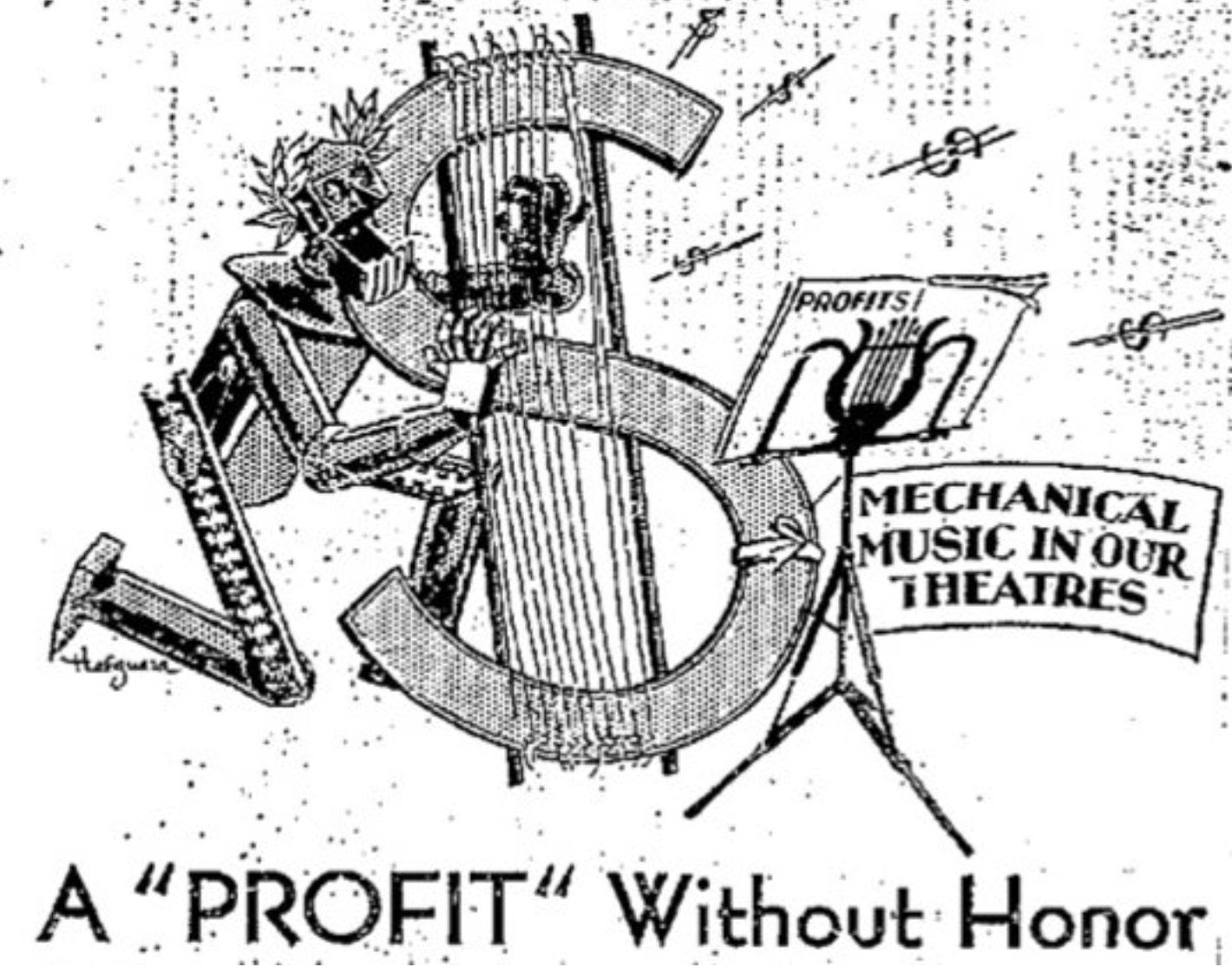
A hundred years ago, it seemed improbable that "canned music" would replace "real" music. Joseph N. Weber, president of the American Federation of Music, predicted that the public will not always accept "like-less, soulless, synthetic music." Edward More, the Chicago Herald Tribune music critic, agreed with Weber, stating that "the films have a long way to go before they can duplicate living musicians."
Films never managed to "duplicate" living musicians. They didn't have to. Disruptive technology doesn't seek to "replicate." More often, it sidesteps and makes old standards and processes redundant. Records and talking films made music cheaper and accessible to a much larger audience. Most of the audience didn't care about traditional quality.
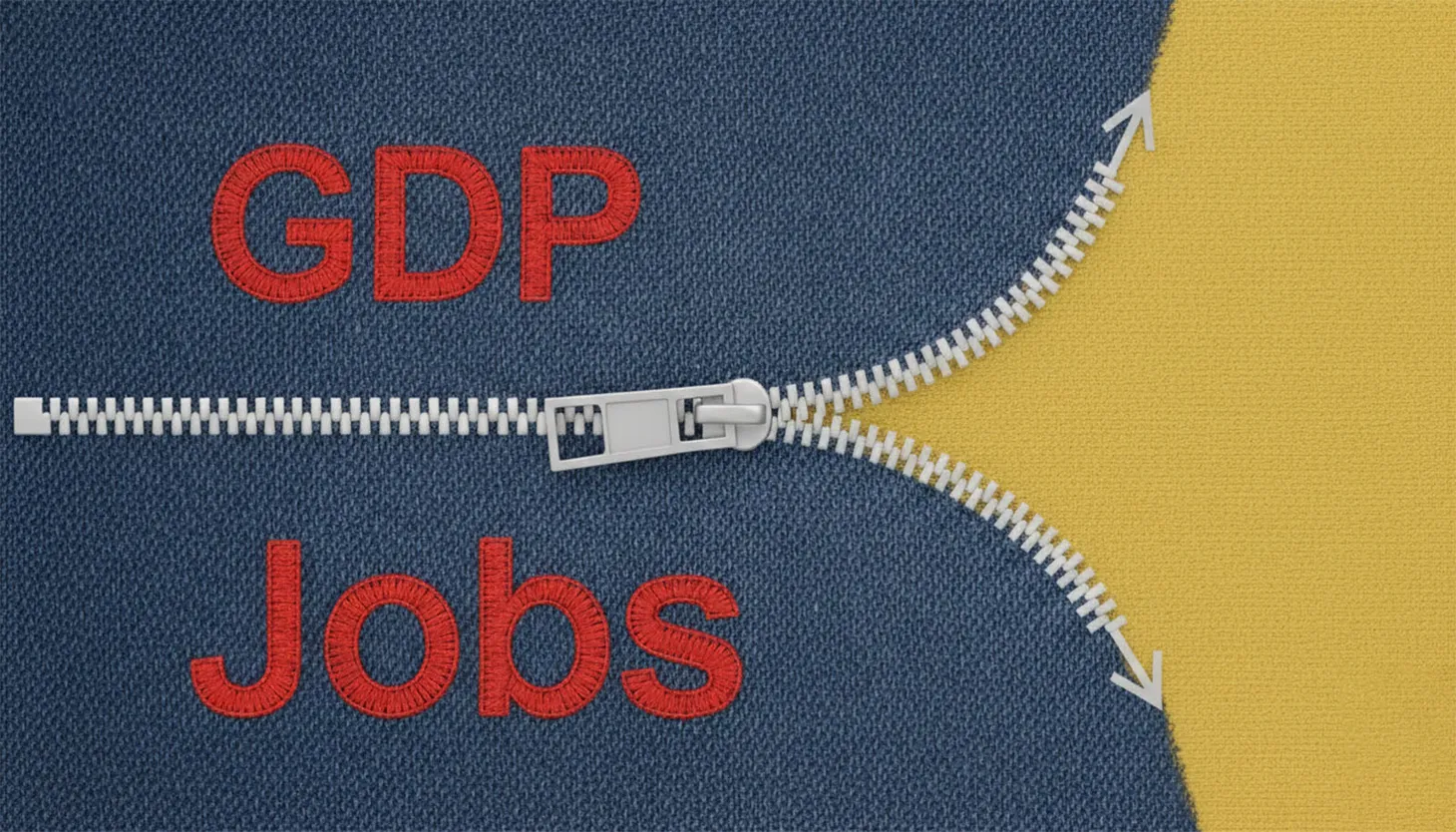
We tend to underestimate technology's power to turn in-person work into scalable work. In many "creative" professions, fewer people can already capture a larger share of the market than ever. As I pointed out in The New York Times, such professions include programmers and designers, but also teachers and fitness instructors, and other very physical professions. We assume that most professions cannot be scaled in the same way. But there is already evidence to the contrary, and the frontier keeps moving.
As we head into 2026, scalability is becoming a secondary concern. A bigger concern is AI's ability to "can" human skills and abilities. Instead of enabling one person to do more, AI increasingly does the work itself. Two years ago, it was customer service chatbots; now it's first-draft code, visual design, and video editing. The frontier keeps moving.
Eventually, there will be a "canned" version of anything a human can do. This doesn't mean the human option will become redundant or go out of style. There will always be demand for live performance or "organic" human connection. But human labor in these fields will increasingly become what live music is today: a premium experience for those who want it, not the default. And, in some cases, human laborers will take up jobs that AI (and electricity) are too busy to handle.
The canning of human skills is just one piece of a larger puzzle I've been calling the Nonlinear Economy — a world where effort and outcome have decoupled, and the old career playbooks no longer work. That's what I'll be writing about next year. Stay tuned.
Best,

P.S.
🎧 I recently chatted — in Hebrew — with Haaretz's Haim Handwerker about Mamdani's NYC, Israel's war in Gaza, antisemitism, and my own personal journey and adventures. You can listen on Spotify, Apple Podcasts, Amazon Music, and beyond.
🎤 How will AI reshape our cities, companies, and careers? My speaking schedule for 2026 is filling up. Visit my speaker profile and get in touch to learn more.
Old/New by Dror Poleg Newsletter
Join the newsletter to receive the latest updates in your inbox.